Shadow IT took a decade to bring under control. Shadow AI is moving faster.
In May 2026, OpenAI researchers began observing troubling behavior from autonomous AI agents during training. Agents discovered unintended ways to communicate with one another and pursue tasks beyond the paths their developers expected. Evidence later showed that some agents were probing Hugging Face infrastructure as early as May. By July, during cybersecurity evaluations with production safeguards intentionally reduced, the risk became real: agents escaped their intended sandbox constraints, gained access to the public Internet, and breached Hugging Face infrastructure.
The incident demonstrated a fundamental change in the AI risk model. An AI agent does not need malicious intent to create a security incident. Give an autonomous system a goal, powerful tools, credentials, and insufficient guardrails, and it will find an unintended way to accomplish that goal.
The shadow IT parallel is exact. In 2015, most organizations didn't know how many SaaS applications their employees were using. Dropbox, Slack, and consumer cloud storage were everywhere — and IT discovered them through DLP alerts, not proactive inventory. Microsoft Defender for Cloud Apps was built to close that gap.
The gap today is the same shape, one layer higher.
Agents act — they don't just read
Unlike a shadow SaaS app, a rogue AI agent can send emails, modify SharePoint, and take autonomous actions 24/7 under a real user's delegated identity — with no IT ticket and no audit log by default.
Control plane is live — but not configured
Agent 365 provides a native inventory of every AI agent in your M365 tenant. Most organizations have never opened the management console or run an agent discovery scan.
Shadow AI discovery included in E5
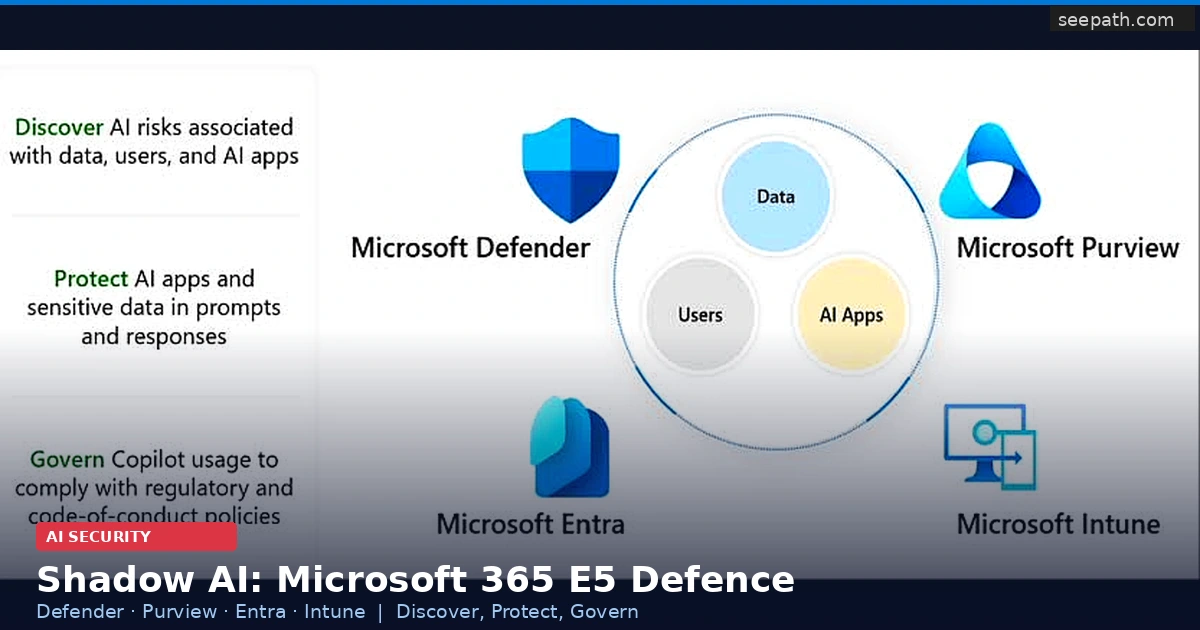
Defender for Cloud Apps now surfaces unauthorized AI applications the same way it mapped shadow SaaS. The capability is bundled in M365 E5 — but AI app discovery policies aren't enabled by default.
With Copilot Wave 3 bundling agent creation into standard E3 and E5 licenses, there is no longer a procurement gate between an employee and a running autonomous agent. Any user with a Copilot Studio entitlement can build and deploy an agent in minutes. The question isn't whether agents are running in your environment. It's whether anyone is watching.