AI Strategy

Microsoft Ignite 2026: Copilot Is Now the OS for Work — What It Means for Your M365 Strategy

Satya Nadella declared Copilot the new OS for work at Microsoft Ignite 2026 — with Office now running inside it, not alongside it. Here's what actually shipped, what's still Frontier, and what it means for your M365 licensing and governance strategy.

November 18, 2026 Seepath Solutions

This Week's Advisory

November 18, 2026

Office just became a plugin — what Microsoft actually shipped at Ignite 2026

The "new OS for work" framing is more than a keynote tagline. At Ignite …

What "Copilot as OS" actually means for IT and operations

The app-to-OS inversion is easier to explain with a before-and-after len…

Three planning gaps most organizations will face in the next 90 days

Gap 1 — Licensing hasn't caught up to the new OS model: The features ann…

Seepath perspective

Ignite 2026 is the clearest licensing and governance signal Microsoft ha…

Microsoft Ignite 2026: Copilot Is Now the OS for Work — What It Means for Your M365 Strategy

Office just became a plugin — what Microsoft actually shipped at Ignite 2026

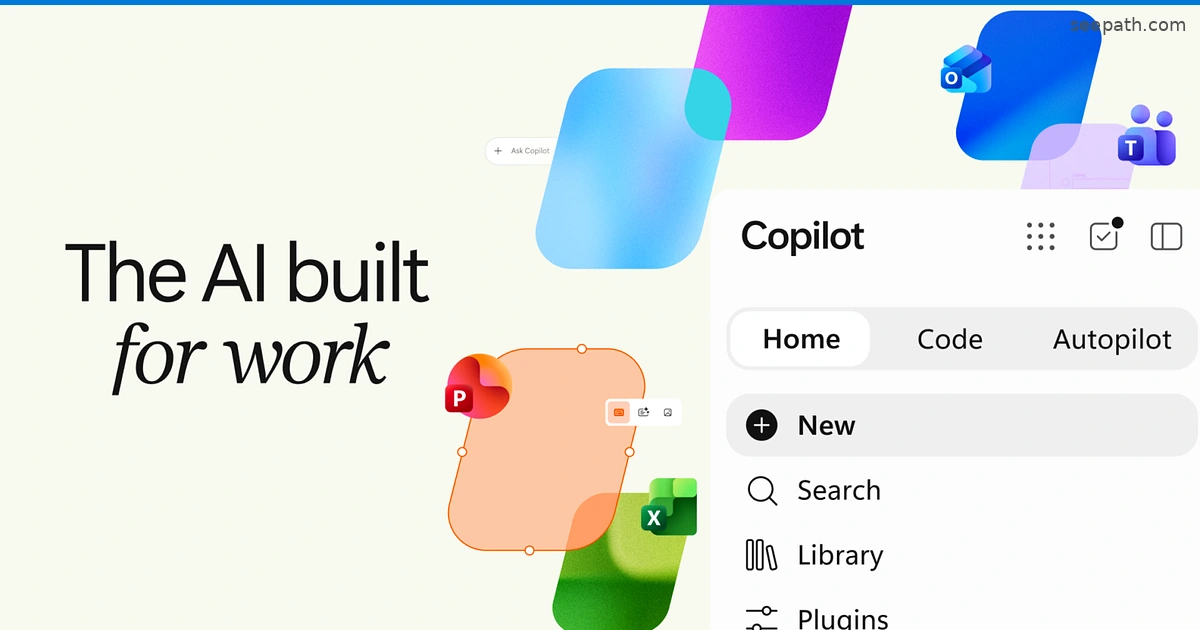
The "new OS for work" framing is more than a keynote tagline. At Ignite 2026 in San Francisco, Satya Nadella restructured how Microsoft positions its entire productivity stack. Office no longer sits at the top of the hierarchy — Copilot does. Word, Excel and PowerPoint are now plugins running inside Copilot, not the other way around. That inversion has real implications for how organizations license, govern and operate Microsoft 365.

Before reading the announcement list, the most important filter is GA versus Frontier. Several of the headlining features — Copilot Workspaces, Autopilot, the new Copilot Code app builder — are rolling out through Microsoft's Frontier program, not broad general availability. What is GA today is significant on its own. What is Frontier sets the planning horizon.

GA Now
Office just became a plugin

Word, Excel and PowerPoint are generally available inside the Copilot app today. Applications used to be the destination. Copilot is now the shell — this is the structural shift of Ignite 2026.

Frontier
Your first autonomous colleague

Autopilot is a 24x7 personal agent with its own Entra ID in your tenant. Colleagues can @mention it in Teams. It acts under its own agent identity — not as the user who built it. Rolling out via Frontier program.

Preview
50M agents, still no FinOps

Nadella cited 50 million agents in Agent 365. Agent 365 Business Analytics — Microsoft's AI FinOps tool — is in preview. Most organizations have no process to connect AI spend to measurable outcomes.

Feature Status Notes
Office in Copilot (Word, Excel, PowerPoint) ✅ GA All Copilot license holders
Copilot Home + Auto router ✅ GA Rolls out worldwide
Dynamics 365 Sales & ERP plugins ✅ GA Requires D365 + Copilot licenses
Microsoft Perception (agentic security) ✅ GA M365 E5 / Defender stack
Cobalt 200 VMs ✅ GA Azure — 14 regions now, 24 by year-end
Copilot Workspaces (multiplayer agents) 🔵 Frontier Evolution of Copilot Notebooks
Autopilot (personal always-on agent) 🔵 Frontier Own Entra ID, tenant-visible
Copilot Code (no-code app builder) 🔵 Frontier → GA Dec December GA target
Salesforce in Copilot (CopilotForce) 🟡 Preview 38 prebuilt sales skills
Agent 365 Business Analytics 🟡 Preview AI FinOps, outcome mapping

Underlying all of this is Microsoft IQ — the context platform pulling from Fabric, Foundry, Microsoft 365 and 350+ new third-party connectors. Work IQ, Fabric IQ, Foundry IQ and Web IQ are the four named layers. Microsoft is positioning this as the intelligence substrate that makes agents useful across the organization, not just for individual users.


What "Copilot as OS" actually means for IT and operations

The app-to-OS inversion is easier to explain with a before-and-after lens. In the previous model, Office applications were the primary work destinations and Copilot was an AI assistant embedded within them. At Ignite 2026, Microsoft flipped the architecture: Copilot is the shell, and Office apps are capabilities that run inside it. The same logic extends to business applications — Dynamics 365 and Salesforce are now plugins in the Copilot interface, not separate destinations.

For IT teams, the operational implications go beyond the product announcements. Identity, cost visibility and security all shift:

Before Ignite 2026 After Ignite 2026
Productivity layer Office apps as primary destination Copilot as the shell; Office as a plugin
Agent identity Agent runs as the user who built it Autopilot has its own Entra ID in the tenant
CRM in context Separate app, manual context switch Dynamics 365 + Salesforce plugins inside Copilot
AI cost visibility Azure invoice line item, retroactive Agent 365 Business Analytics, outcome-mapped
Security posture Perimeter + endpoint protection Perception: autonomous red, blue and green agent teams
Governance signal AI policy documents Agent 365 FinOps + AI Transparency Initiative

One detail from the Autopilot announcement that every IT admin should note: Autopilot agents have their own Entra identity, their own memory, and their own tool access inside the tenant. Colleagues can @mention someone's Autopilot agent in Teams. That means agent actions are attributed to an agent identity — not the user who created it — and are visible to admins in Agent 365. That is a significant governance improvement over the current model, but only if Agent 365 is configured and monitored before Autopilot reaches your users.


Three planning gaps most organizations will face in the next 90 days

Gap 1 — Licensing hasn't caught up to the new OS model: The features announced at Ignite — Office in Copilot, Autopilot, Workspaces, Perception, the full Agent 365 governance stack — require Copilot licenses, and the security layer requires E5 or higher. Organizations on M365 E3 without Copilot add-ons, or on Business Premium, are effectively outside the new operating model Microsoft announced this week. The upgrade path from E3 to E5 or E6 is now a strategic question, not an optional enrichment decision. E6 — which bundles Copilot licenses with the full E5 security stack — is the most coherent single step for organizations planning to deploy Autopilot and activate Perception.

Gap 2 — Autopilot will arrive before most tenants are governance-ready: Autopilot is rolling out through the Frontier program now. That means it will reach users before most IT teams have configured Agent 365, deployed sensitivity labels across the tenant, or scoped agent identities to least-privilege Conditional Access policies. When Autopilot arrives, it will have access to everything the user who activated it can reach — SharePoint, Exchange, Teams — unless data boundaries are already in place. The same governance infrastructure that applies to shadow AI applies here: agent inventory first, data access scoping second, then consumption monitoring. The governance work needs to precede the rollout, not follow the first incident.

Gap 3 — No AI FinOps process to connect spend to outcomes: Nadella cited 50 million agents in Agent 365. Agent 365 Business Analytics — Microsoft's answer to AI spend visibility — lands in preview in December, with value insights expanding across Microsoft and non-Microsoft agents in January 2027. Most organizations today have no consolidated view of what AI is costing them or what outcomes it is producing. Autopilot and Copilot Code run 24x7 and consume AI credits without human confirmation. Without a chargeback framework and outcome-to-spend mapping in place before broad rollout, the AI budget dynamic will mirror the cloud sprawl problem organizations spent years cleaning up.


Seepath perspective

Ignite 2026 is the clearest licensing and governance signal Microsoft has sent in several years. The question for every M365-licensed organization is no longer "should we evaluate Copilot" — it is "are we on the right licensing tier to operate in the new model, and is our governance infrastructure ready before Autopilot reaches our users?"

For organizations on M365 E3 or Business Premium, an AI and licensing readiness assessment is the right starting point. The Ignite announcements make the gap between E3 and E5/E6 more visible and more consequential. For organizations already on E5 with Copilot licenses, the governance layer — Agent 365, Purview AI Hub, Perception playbooks, Conditional Access for agent identities — needs to be activated before Frontier program features reach your tenant, not after.

For organizations building on the Copilot platform, Autopilot's arrival means every tenant will soon have autonomous agents operating 24x7. Organizations that have deployed custom AI agents with proper governance frameworks are significantly better positioned than those where agents have proliferated without an inventory or access scope. For teams on Managed AI Operations with Seepath, the Ignite 2026 announcements will be incorporated into the next advisory cycle, covering Agent 365 Business Analytics activation, Perception playbook deployment, and E6 upgrade planning where relevant.

For broader context on what the agent governance gap looks like in practice, the AI agents already running in your tenant post from August 2026 covers the foundation. The Ignite announcements accelerate that timeline considerably.

"Office is now a plugin inside Copilot. That inversion changes what your licensing strategy needs to deliver, what your governance infrastructure needs to cover — and when it needs to be ready."

Assess your readiness for the new Copilot OS model →


Ready to Get Started?

Talk to a Seepath expert about your Azure, security, or AI strategy — no sales pressure.

Contact Us

Weekly Advisories

Get the latest Microsoft security, Azure, and AI updates delivered weekly.

Subscribe

Want Personalized Guidance?

Seepath has been a Microsoft Direct Bill CSP since 2014 — serving financial services and healthcare organizations.
with hands-on Azure, security, and AI implementation.

Free Azure Assessment Talk to an Expert